SharePoint 2010 for Web Content Management, Pros and Cons

image A couple of years ago, I attended a discussion on using SharePoint/MOSS 2007 for Web Content Management and wrote a well visited post, SP for WCM, The Movie.  Well, as you may have noticed, Microsoft released a new version this year and they are starting to market it heavily with SharePoint Solutions for Internet Sites.

Well, this week I participated in the SharePoint Symposium 2010 as part of KM World.  Specifically I was part of the panel discussing the question of whether or not you can use SharePoint for WCM.

I’ll give a simple answer at the bottom, but I’m going to share the thoughts and opinions that were shared by others and myself.

Continue reading

If I Were At Momentum Europe…

Momentum Europe, the 2010 edition in Lisbon, is this week.  I can’t be there, mostly because I would have a hard time justifying the cost given how much work I do in Europe (which at last count was $0).  I am a little jealous of Lee Smith getting to attend and present at the conference, so I will have to live a little through others.

Why am I sad to miss this? Well, there is the changes in three key leadership positions at IIG since EMC World:

Continue reading

Leadership Changes for EMC’s Documentum

This post has been a long time in coming. I’m not talking about the news that has triggered the actual writing of the post, just the themes of the post overall.  They should be pretty clear shortly….image

That said, let’s hit the headline, Mark Lewis is no longer the President of EMC’s IIG business unit, which is effectively Documentum.  Rick Devenuti, formerly the COO, is effectively taking over the position.

Wow.  I’m happy, but you need to read on to understand that oversimplification of my mood.

Continue reading

Documentum xPlore, The New “FAST” Search

Taking a break from talking about the economics and future of Content Management to look back at the reality we are facing today.  For all of the need to start moving to the future, we all still have problems that have to be solved today.

imageOne of my most challenging problems in Documentum is full-text search.  While fine for the average system, FAST is a beast.  It requires a large cage, is barely tamed, and takes a lot of work to train for larger tasks.  When you invest in it, life is good, but it is an investment of time and effort.  Like many, a chance to have a scalable, highly-available, reliable, and EASY full-text search as part of the system is something we’ve been missing in Documentum and most Content Management systems.

Well, that is changing.  At the end of October, the new Documentum xPlore search engine is being released.  Known during development as Documentum Search Server, xPlore promises to make life much easier for people.

Before I add any more details, the usual disclaimers apply.  Anything in this post talking about things not released, including dates, is subject to change.  If anything in this post fails to take reality, don’t yell at EMC, yell at me….and I’ll yell at EMC. 😉

Continue reading

License Fees Blocking the Future of ECM

So in case  you’ve missed it, I’ve been talking about how fixation on license fees can have a negative impact on on both the customer relationships and on product development.   There has been a reason for this conversation, the need to transform Content Management into a commodity.

This was discussed at the EMC Writer’s Summit event earlier this month.  Led by Andrew Chapman, we tried to identify what we could accomplish if Content Management was commoditized and was just there to be used.  Johnny Gee followed up this discussion with a post about ECM as a Commodity, sharing some of his thoughts in more detail.

Before talking about the license fee impediment Content Management Commodization, I’m going to touch on the Commodity issue a bit.

Continue reading

How License Costs Impact ECM Platforms

I talked last week how the license commission structure can hurt customers.  There were a LOT of great comments and insights from the product side.  Would love to have customers and consultants chime in on their feelings, but I can’t have everything.

image There were two comments that I wanted to address in more detail.  The first was that money isn’t the only driver of behavior for people.  That is very true.  That said, all else being equal, ask yourself this question: Who will a sales person go talk to first? The company that will help land a commission and meet quota, or an existing customer?

The fact that money is not the sole motivator of behavior is not something to just be dismissed, but neither can the impact cannot be discounted.  The very existence of financial incentives will impact behavior.  Let’s face it, when those incentives aren’t earned by an employee, those details show up in a performance review.

Now that I’ve thrown some debate points out there, let’s dive into the details of this post.

Continue reading

The Challenge for the “ECM” Vendors

image I’ve been meaning to write this post for a while, but I’ve been a tad busy.  Then today, I saw a post over at the Real Story Group by the ever-so-wise Alan Pelz-Sharpe.  In that post, he talks about the High Cost of Support, and how it seems to be rising.  It is a great post that cuts a little into the financial actions of some of the vendors.

This is important to understand because financial incentives is what drives behavior at product companies, and all companies for that matter.  Even startups that do anything and everything to please customers, but aside from a few founders with visions of a new world order, they are driving towards the payoff of the IPO.

With that in mind, let’s look at how some of the financial systems at Enterprise Software Vendors, not just Content Management, impact behavior of their employees and thereby impact the customers.  Keep in mind that they’re are exceptions to the rule.

Continue reading

The EMC Writer’s Summit, 2010 Style

For those that are unaware, EMC hosts writers in the Content Management space for a 1-day gabfest about once a year.  Last week was the third one, so I guess we can officially call it annual.  This is an invite only event with some of the expenses paid.  That may lead you to wonder about what was discussed and if it was biased…

Well, it wasn’t biased or tilted at all.  First of all, kudos to EMC for inviting me.  I wasn’t the nicest person on the block after EMC World, but they still went out of their way to make sure that I was able to attend.  Their were no conditions placed upon me, and my degree of rabble-rousing was left to my own discretion.

The best part was that aside from a short intro by EMCs Whitney Tidmarsh on “Why IIG” and the changes taking place within IIG, there was no EMC focused topics or discussions.  There were some EMC opinions put out there, but they were contributions and not dictates.

All-in-all, it was a great event that spurred some great discussions and debates.  I’ll be talking on some of the topics over the next week or so here.

Continue reading

ECM, Wanted Dead or Alive?

image One thing that I have been meaning to do is to dive back into the state of Enterprise Content Management (ECM) as a useful term and the challenges facing its use. I’ve also been meaning to draw attention to some of the excellent posts in the new AIIM Communities. I am going to try and address both deficiencies today to some degree.

Let’s start with ECM, because that has been the point of my career for over a decade now. When we last saw it, I was talking about its future and how it is moving to becoming Omnipresent Content Management (OCM). While the term “Universal” is also apt, Oracle already stole it.

Before we get into more detail, and leave Steve McQueen, the question really is, Where does that leave ECM?

Content Management vs. ECM

Okay, this is the finale that Peter Monks has been waiting on, and baiting me about, for quite some time. Let’s hash it out.

Continue reading

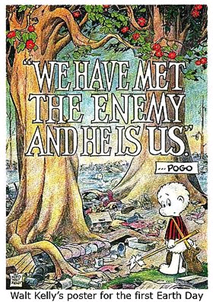
The Enemy of Collaboration

image A week ago, I wrote an article for CMS Wire on The Long Hill for Enterprise Collaboration.  Normally I put an announcement at the top of my blog sharing the link, but I wanted to write this post, and I’ve just been a tad busy…

You should read the article before proceeding much further.  In the article, I talk about the challenges facing the adoption of collaboration tools, an important one being the desire to perform one activity in one interface.  Email is a classic example because, for all its faults, you can collaborate with anyone with an email address.  People will tend to stick with one tool and not keep switching unless they are the “stopper” that is always on a mission to convert people to the good of collaboration platforms.

Well, this scenario is something I have seen quite a bit.  There is one example that really drives home the need to get people not just out of email, but to get everyone into something that can transfer collaborative data between systems just like email is transferred using SMTP today.  That example….me.

Continue reading