
The current gap that I see in the ECM standards is in the world of SOA. I’ve tried to make a case for having such a standard in the past. However, Bex Huff said that we don’t need another ECM standard. Let’s look at the existing standards and see if one of them can fill the void.
SOA
The ECM Magic Quadrant
[Updated 11/10/2008 in order to make Gartner, Inc. happier, or at least less angry.]
[Edit: See the newer The Magic Quadrant for Enterprise Content Management, 2008 write-up.]
The latest version [This is the now old 2007 version] came out a couple weeks ago. There has been, and will continue to be, some criticism of the Gartner, Inc. methodology. For now, let’s set it aside and look focus on what the report says. While it may not cover all the vendors, and may not define “leader” in the same manner as others, the information inside can still prove useful.
Transparent ECM and SOA
Something happened recently that doesn’t happen too often. Two ECM vendors posted blog posts on similar topics. It definitely wasn’t intentional and they approached the topic from two different angles. However, it is worth noting and comment. The more interesting post, to me at least, was from EMC.
Review: Service-Oriented Architecture (SOA) Compass
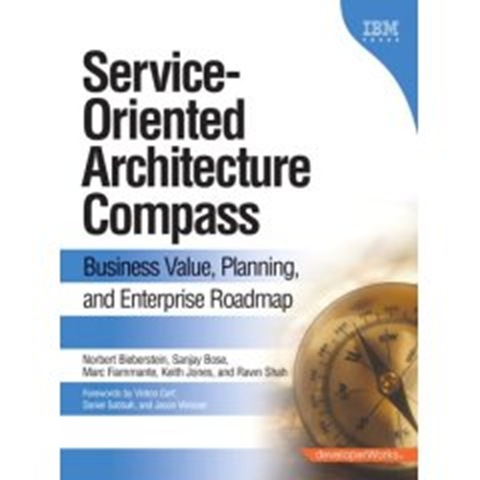 |
Service-Oriented Architecture (SOA) Compass Business Value, Planning, and Enterprise Roadmap IBM Press (Various authors)2006 |
The time came for me to read-up on SOA in order to further develop my concepts of how Enterprise Content Management should fit within the Enterprise. So I starting looking for some books on the topic. A large majority of the recommended books were hundreds of pages long, not exactly easy reading for the Metro. I researched and picked SOA Compass from IBM Press.
Choosing a Target for Standards
Reaction to my previous two posts revealed two simple things about the Universe. Enterprise Architects want/need ECM standards now. Enterprise Content Management people don’t think that the ECM world is ready for them. They are both right, so let the fighting begin.
Brian “Bex” Huff wrote about the lack of useful ECM standards and how writing a standard to the lowest common denominator would leave it all but useless. He raises some excellent points, but I think there is an important thing here. If an ECM system doesn’t support a minimal level of functionality, is it really Enterprise worthy? If it isn’t ready for the Enterprise, do we care if it can’t integrate with everything else? I’m thinking No on both counts.
Technology Standards and the Enterprise, Getting Too Much Attention?
I have a bunch of things that I have wanted to talk about on this blog. I am going to be the first to admit, that standards wasn’t really on my radar to write about here. In years past, whenever I got to the standards portions of ECM presentations in years past, I only cared because saying a product met standards meant it might be easier to sell. More recently, I had begun to understand and care, but only enough to pay more attention and think about how it can help my current projects. In the past few weeks, the topic of standards has been showing up all over my radar, and then it hit me. I need to make everyone else care as well.
EMC’s Vision of ECM 2.0
I’ve previously posted on how D6 is laying the foundation for ECM 2.0 (E2), as well as some of the key features of that release. Before I start delving into some of those features in detail, I though I would go over what E2 is envisioned to be once it is delivered. Personally, this is a lot of marketing-speak, as is Web 2.0, but it shows a lot about the why in the future of Documentum.
 Word of Pie